


Advanced therapies


IFPMA supports the innovative pharmaceutical industry advance new generations of medicines, guided by science‑based regulatory systems that help ensure quality, safety, and meaningful benefit for patients worldwide.
Overview
In line with its mission, IFPMA promotes globally coordinated approaches that bring together regulators, industry, and health authorities to help ensure that regulatory systems evolve in step with scientific progress.
Cell and gene therapy
Cell and gene therapies are transforming how diseases are treated.
Gene therapy delivers genetic material to treat diseases like inherited disorders, cancers, and rare conditions. Cell therapy uses or modifies cells to restore function or deliver treatment, with the potential to reduce—or in some cases eliminate—the need for lifelong therapies.
These advanced therapies, also named regenerative medicine or Advanced Therapy Medicinal Products (ATMPs), represent a major scientific advance for patients with serious and unmet medical needs. However, their development and delivery is shaped by complex, fragmented regulations worldwide, with few regions having clear, dedicated frameworks in place.
Differences in classification, approval pathways, and clinical practices create uncertainty for manufacturers and regulators alike, and can delay patient access.

Greater international alignment on the definition and classification of ATMPs is essential to enable reliance and recognition approaches that support timely access to these innovative therapies, while upholding high standards of quality, safety, and effectiveness.
IFPMA advocates for regulatory approaches that are science-based, collaborative, and patient-centered, including:
- Harmonized product classification, and regulatory standards
- Increased use of reliance and collaboration across ATMP lifecycles
- Standardized accreditation and labelling practices
- Streamlined, risk assessments for Genetically Modified Organisms
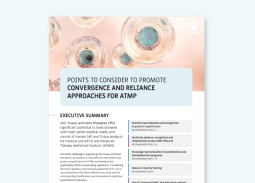
Convergence and reliance approaches for advanced therapy medicinal products
This paper discusses the need to converge on the definitions and classification of ATMPs in order to foster reliance and/or recognition approaches to enable patients’ access to ATMPs.
Read more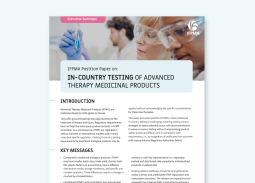
In-country testing of Advanced Therapy Medicinal Products
This paper discusses specifics of ATMPs, where traditional in-country testing is challenging, outlining existing control strategies to detect potential issues.
Read moreRadioligand therapy
Radioligand therapy (RLT) is an advanced, targeted cancer treatment with growing clinical use.
It delivers precise radiation to cancer cells while limiting exposure to healthy tissue. It offers both therapeutic and diagnostic (theragnostic) capabilities, enabling more targeted treatment options and monitoring, supporting better outcomes for patients.
As this field evolves rapidly, IFPMA focuses on the regulatory challenges that affect the development, approval, and delivery of RLTs, including:
- Lack of regulatory harmonization and limited use of reliance approaches
- Fragmented regulatory frameworks and uneven global readiness
- Complex manufacturing and supply chain requirements
- The need for specialized infrastructure and trained workforce needed for safe administration
Biotherapeutics
Biotherapeutics are advanced therapies developed by modifying living cells to produce or alter proteins, enabling innovative treatments across a wide range of diseases.
They complement traditional small-molecule medicines, especially for complex conditions.
The development and manufacturing of biotherapeutics are highly complex, requiring following rigorous regulatory frameworks, clinical trials, and post-approval monitoring. Given the high scientific, technical, and economic risks involved, strong intellectual property protection is essential to sustain innovation and support continued investment in new biotherapeutic medicines.
Biosimilars are highly similar, but not identical, versions of original biotherapeutics. Because a biotherapeutic’s characteristics are intrinsically linked to its manufacturing process, biosimilars cannot be treated as generic medicines. Demonstrating biosimilarity requires thorough comparative evaluation against a reference product to confirm comparable quality, safety, and efficacy. There are dedicated regulatory pathways for biosimilars.
IFPMA supports WHO’s 2022 Guidelines on evaluation of biosimilars, which sets an international standard for assessing similarity. The implementation of these Guidelines is underway globally, and supports ensuring science-based regulatory frameworks.
Policy considerations for the development, regulation and adoption of biosimilars
Biosimilars can play a role in expanding patient access to biological medicines and in supporting the sustainability of healthcare systems.
Read more
Pharmacy-mediated substitution for biosimilars
This position paper addresses substitution relating to biosimilars and their reference products at the retail pharmacy level.
Read more
Global regulatory approaches to post-approval changes in biotherapeutic products
IFPMA worked with Clarivate to study how different countries and regions approach the regulation of post-approval changes (PACs) in biotherapeutic products.
Read more
Synthetic follow-on products that reference biologically produced medicines
The focus of this paper is follow-on versions of smaller protein products developed to be marketed following expiry of patent and data protection of the reference product.
Read moreDrug device combination products
Drug‑device combination products bring together medicines and medical devices to deliver more integrated, personalized, and effective care for patients.
These products currently face major regulatory challenges due to fragmented frameworks, inconsistent standards, and limited coordination among national regulatory authorities. These challenges can delay patient access, increase compliance complexity for manufacturers, and place additional strain healthcare systems.
IFPMA supports a globally coordinated approach bringing together regulators, industry, and health authorities to harmonize processes and ensure timely access to innovative therapies. Key actions include raising awareness, engaging industry experts, and supporting regulatory reliance initiatives to streamline approvals and leverage trusted assessments.
Join the global effort to help convergence
IFPMA invites all stakeholders to join a global effort to develop a set of common principles that can help convergence in the regulatory evaluation and market availability of advanced therapy medicinal products.
Other regulatory topics
See all
Convergence and regulatory reliance
IFPMA acts as a convener and encourages dialogues with national regulatory authorities (NRAs), regional regulatory bodies, and global regulatory networks to address key regulatory hurdles and identify solutions to facilitate patients’ timely access to innovative therapies.

Quality, safety, and efficacy of therapeutical products
IFPMA collaborates with the World Health Organization (WHO), regulatory, and other standard-setting bodies to share experience and scientific input and implement guidelines standardizing the quality of medicines and vaccines.