

Influenza


Together with the global health community, the innovative pharmaceutical industry works to improve seasonal influenza vaccine coverage and wider influenza pandemic preparedness for the future.
Overview
Seasonal influenza is an acute respiratory infection caused by viruses that circulate year-round, with a considerable disease burden.
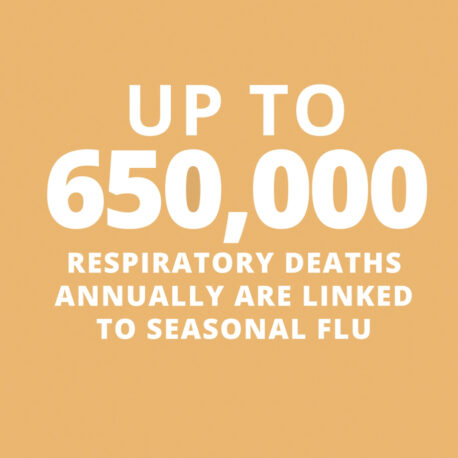
In a typical year, there are an estimated 1 billion cases of influenza and up to 650,000 influenza-related deaths globally. Influenza is most serious for older people, pregnant women, young children, and people with underlying health conditions.
Vaccines are the best way to protect the most vulnerable against seasonal influenza, with antivirals being available to treat those who have been infected.
Recent WHO modeling shows that broad use of improved seasonal influenza vaccines could prevent between 6.6 and 18 billion additional influenza cases, 2.3 to 6.2 million deaths, and 21 to 57 million disability‑adjusted life years (DALYs) globally between 2025 and 2050. These findings underscore the magnitude of protection that effective influenza immunization can deliver across the life course and the long‑term value of sustained investment in prevention.
Vaccines candidates in pipeline
Vaccines in active clinical trials
Platform technologies
The burden of influenza
Every year, influenza puts enormous strain on health systems and economies across the globe, while also affecting individuals, families, and communities.
This pressure affects healthcare services, contributes to reduced workforce capacity and productivity, and results in illnesses and deaths that could be prevented.
Outbreaks of seasonal influenza also take a significant toll on societies, disrupting economic activity. For instance, the cost of seasonal influenza in adults aged between 18 and 64 were reported to be up to EUR 14 billion a year in the European Union, with substantial additional costs from older populations. Globally, preventable conditions – including influenza-related complications – cost G20 economies USD 1 trillion annually in lost productivity.
Up to 650,000 respiratory deaths from seasonal influenza worldwide
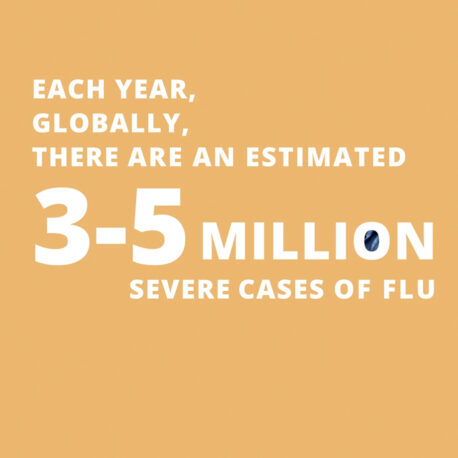
Severe, life-changing health complications with 3–5 million cases of serious illness
Only 18 of countries achieve coverage above 70%
Investing now in prevention and life-course immunization will strengthen our capacity to overcome future challenges and promote long-term well-being, preserving independence, and extending lives, particularly for the most vulnerable.
Protecting populations and healthcare systems
Immunization is widely recognized by public health authorities and healthcare professionals as a safe and effective tool to protect populations against influenza complications and negative outcomes.
Influenza vaccination substantially reduces the risk of severe disease, hospitalization and death – particularly among older adults and people living with chronic conditions. Evidence shows that vaccination reduces the likelihood of ICU admission, shortens hospital stays and lowers the risk of complications such as stroke, cardiac events and exacerbations of chronic respiratory disease.
These benefits also extend beyond individual protection. By reducing the burden of influenza across the life course, immunization delivers meaningful value for populations and provides a strong foundation for healthier, more resilient societies.
From protection to prevention: The power of immunization for people living with non-communicable diseases
The policy report From protection to prevention: The power of immunization for people living with non-communicable diseases has been commissioned to The Health Policy Partnership (HPP) by IFPMA.
Read moreInfluenza vaccination can reduce the risk of death from stroke by 50%
Influenza vaccination has been associated with reduced hospitalizations among people with diabetes by up to 79%
People with cancer are at greater risk of severe influenza, and that risk may remain elevated up to five years after their cancer diagnosis and treatment
Protecting our societies and economies
Influenza immunization helps mitigate losses related to absenteeism, lost productivity and avoidable healthcare expenditure by keeping people healthy, in work and out of hospital, generating benefits for employers, governments and wider society.
For employers, influenza vaccination can reduce absenteeism and workplace disruption during seasonal outbreaks. By helping employees remain healthy and productive, vaccination supports business continuity and reduces the operational impacts of seasonal influenza.
For governments, influenza immunization is an investment in both fiscal sustainability and human capital. By preventing avoidable illness, hospitalizations and complications, influenza immunization reduces demand on publicly funded health services and helps avoid healthcare expenditure that would otherwise be incurred during seasonal outbreaks.
On a societal level, influenza immunization represents a highly cost-effective investment generating value across sectors. By reducing healthcare utilization, productivity losses and the wider societal impacts of seasonal influenza, vaccination generates value that extends well beyond the health sector.
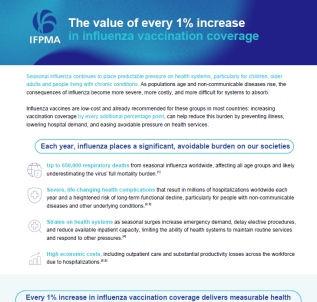
The value of every 1% increase in influenza vaccination coverage
This IFPMA infographic shows how just a 1% increase in seasonal influenza vaccination coverage can deliver substantial health and economic benefits.
Read moreEvery 1% increase in global influenza vaccination coverage would result in over 18,000 avoided hospitalizations every year
Across high- and middle-income settings, influenza vaccination can generate up to USD 22 in societal benefits for every USD 1 invested.
In the United States, every 1% increase in influenza vaccination coverage could save over USD 22 million in hospitalization costs.
Unlocking the full value of influenza immunization
Globally, immunization coverage remains well below the WHO target of 75% for older adults. The following recommended actions offer a practical path forward to unlock the full value of influenza immunization:
- Strengthen national coordination and clarify implementation roles. Influenza immunization requires clear leadership, coherent planning and well‑defined operational responsibilities.
- Expand and simplify access pathways. Access should be simple, convenient and available across multiple touchpoints.
- Integrate influenza immunization into chronic disease and healthy aging strategies. Influenza vaccination should be a routine part of care for people living with chronic conditions and older adults.
- Enable healthcare providers to administer effective influenza immunization to the public. Providers need the right incentives and support to deliver high coverage.
- Improve communication, visibility and public awareness and understanding of the value of influenza immunization. Consistent, evidence‑based communication is essential to maintain public awareness and counter misconceptions.
- Position influenza immunization as a pillar of preparedness and resilience. Influenza vaccination strengthens system resilience and supports broader health security goals.
Influenza immunization, a key pillar of health security
Effective influenza immunization programs support the infrastructure needed to respond to future health emergencies at both national and global levels. This includes manufacturing capacity, surveillance systems, supply chains, vaccination delivery networks and a trained immunization workforce. By maintaining these capabilities between crises, influenza programs ensure that countries are better prepared to scale up vaccination rapidly when needed.
Influenza surveillance and vaccination systems also play an important role in pandemic preparedness. The WHO’s Global Influenza Surveillance and Response System (GISRS) is one of the few global systems capable of detecting emerging respiratory threats early and coordinating rapid scientific and operational responses.
Routine influenza immunization also strengthens public trust and familiarity with vaccination systems – two elements repeatedly shown to be critical during health emergencies.
Preventing pandemic influenza
Seasonal influenza vaccination programs significantly enhance overall pandemic preparedness:
- They provide an annual opportunity to develop global and national systems. Countries with established seasonal influenza vaccination programs consistently demonstrate better preparedness and more rapid and effective vaccine roll-out during a pandemic, as evidenced by the response to the 2009 H1N1 and 2020 COVID-19 pandemics.
- Consistent seasonal campaigns build public awareness, familiarity with vaccination, and trust in health authorities and vaccine delivery systems. This strengthens the societal infrastructure necessary for rapid and widespread vaccine acceptance during an emergency, including managing misinformation.
- Regular demand for seasonal vaccines incentivizes manufacturers to maintain and invest in production capacity and R&D capabilities, which are critical assets for surging production during a pandemic.
IVS Task Force
The IFPMA Influenza Vaccine Supply International Task Force (IVS Task Force) was established in February 2002 to address the challenges of seasonal and pandemic influenza.
The IVS Task Force brings together research-based vaccine manufacturers conducting R&D, development, and production to provide safe, effective, high-quality human vaccines and antivirals against seasonal, pre-pandemic, and pandemic influenza.
To better measure global access to influenza vaccination, the IVS dosse distribution survey was established in 2008. Conducted every two years, it tracks the worldwide distribution of influenza vaccine doses and serves as a proxy for vaccination coverage, showing how rates have shifted over time both globally and across WHO regions.
The latest edition, published in October 2025, reveals a decline in distribution compared to previous years: In 2023, 679 million doses were distributed. This amounts to 17% fewer vaccine doses distributed globally than in the peak year, 2020, when a total of 814 million doses were distributed.



















Let's be 100% committed to flu vaccination
Vaccination can help stop seasonal influenza in its tracks – and help prevent at-risk people being hospitalised or suffering complications. Let’s act now, to make sure those who most need protection, get the vaccine. #TogetherAgainstFlu #TeamVaccines
Share this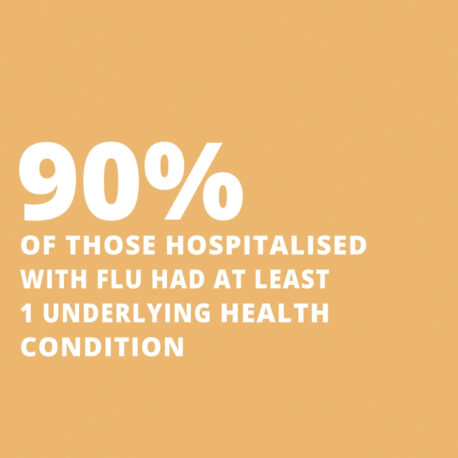
For people with underlying or chronic health conditions, vaccination against seasonal flu is even more important. So together, let’s be 100% committed to helping at-risk patients get vaccinated – and get protected. #TogetherAgainstFlu #TeamVaccines
For people with respiratory problems or underlying respiratory conditions, flu vaccination can help prevent severe complications. So, this winter, let’s act as one to help those at risk, get vaccinated – and get protected. #TogetherAgainstFlu #TeamVaccines

Pathogen sharing
Immediate, unrestricted access to pathogens and their genetic information is fundamental to global health security and the crucial first step to developing the vaccines, medicines, and tests the world needs.
Vaccines
The innovative pharmaceutical industry supports the discovery of new vaccines and their access to prevent and control diseases, improve the health of people everywhere, and make the world a safer place.

Non-communicable diseases
IFPMA helps tackle non-communicable diseases (NCDs) by building multi-sectoral alliances and reinforcing the importance of investing in NCD prevention and care through our policy, advocacy, and communications work.
Influenza campaigns and initiatives

#TogetherAgainstFlu
Our #TogetherAgainstFlu digital campaign aims to raise awareness of the importance of flu vaccinations for healthcare workers, older adults, and patients living with chronic conditions.
Read more
#VaccinesForLife
Our #VaccinesForLife campaign focuses on highlighting the benefits of current and future vaccines for everyone over the course of their lives.
Read more
#PreventionForChange
Health prevention is a critical piece for resilient healthcare systems, societies, and economies.

#AlwaysInnovating
Immunization plays a vital role in preventing and managing chronic diseases. Let’s unlock the potential of vaccines.
Read more
The WHO and global influenza surveillance
Since 1952, global influenza surveillance has been conducted through WHO’s Global Influenza Surveillance and Response System (GISRS).
Read more
The Partnership for International Vaccine Initiatives
PIVI’s mission is to reduce the global disease burden from influenza and other respiratory viruses and improve national and global capacity to respond to pandemics and other epidemic threats.
Read more
The Global Influenza Hospital Surveillance Network
The Global Influenza Hospital Surveillance Network (GIHSN) is a network of 100+ hospitals in 25+ countries performing active surveillance following the same core protocol.
Read more
#TogetherAgainstFlu
Our #TogetherAgainstFlu digital campaign aims to raise awareness of the importance of flu vaccinations for healthcare workers, older adults, and patients living with chronic conditions.
Related news and resources
See allThe value of every 1% increase in influenza vaccination coverage
This IFPMA infographic shows how just a 1% increase in seasonal influenza vaccination coverage can deliver substantial health and economic benefits.
Read more
Pandemic Influenza Preparedness Framework (EB152)
On 6 February 2023, IFPMA delivered a statement for the WHO EB152 agenda item related to the Pandemic Influenza Preparedness Framework.
Read moreCall for special pathogen sharing measures to be included in COP15 Digital Sequence Information negotiations
IFPMA statement on behalf of the pharmaceutical industry at the Convention on Biological Diversity (CBD) COP 15 meeting regarding Digital Sequence Information.
Read moreOther health security topics
See all
Pandemic preparedness
The innovative pharmaceutical industry has played and will continue to play a critical role in pandemic preparedness response. IFPMA has a strong track record as a partner contributing knowhow and exploring solutions.

COVID-19
When the COVID-19 pandemic hit, the innovative pharmaceutical industry came together with the broader global health community and responded with unprecedented speed and scale, overcoming major hurdles along the way.

Ebola Bundibugyo
While no treatments or vaccines are currently approved against the Bundibugyo virus, pharmaceutical companies are working with global partners in a coordinated response.