
Immunizing across the life course: Supporting healthy ageing, NCD management, and system resilience (WHA79)
Date
22 May 2026
Time
13:00 - 14:20 CET
Location
World Health Organization Headquarters
Building A, 3rd floor. Salle B
Avenue Appia 20
1211 Geneva, Switzerland
Attendance
This event has now passed. To browse our upcoming events click here.
Immunization across the life course is a vital yet underused strategy for strengthening health systems and supporting economic resilience as societies age and the burden of NCDs accelerates.
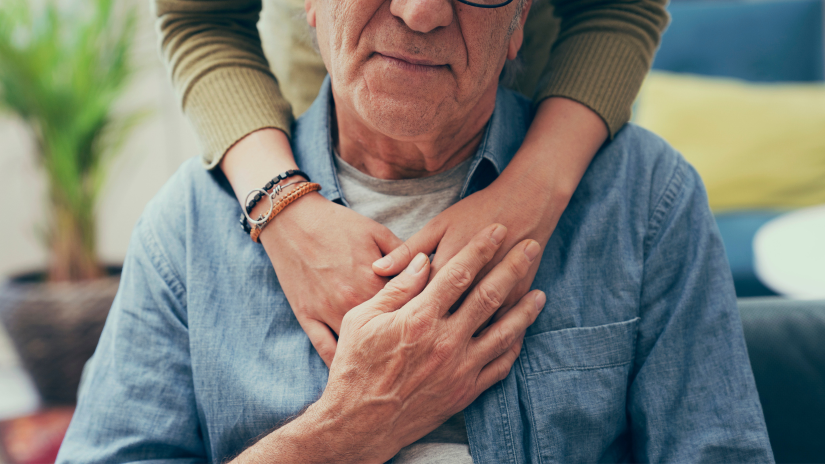
Older adults and people living with chronic conditions face higher risks from respiratory infections that can destabilize disease control, accelerate functional decline, and lead to avoidable hospitalizations. These health shocks also carry economic consequences—reducing labour participation, increasing long-term care needs, and adding pressure on already constrained health budgets. A life-course approach to immunization within primary health care offers a practical pathway to protect vulnerable populations, reinforce continuity of care, and advance progress toward Universal Health Coverage.
Co-organized by IFA, GAAPP, and IFPMA, this WHA79 official side event explored how life-course immunization can strengthen PHC-led models designed to meet the needs of ageing populations and people living with NCDs. The discussion highlighted how life-course immunization can support healthier ageing, stable NCD management, and improved system efficiency at a time of tightening fiscal space and rising service demand.
Watch the recording
Address
World Health Organization Headquarters,
Avenue Appia 20,
1211 Genève, Switzerland
Speakers
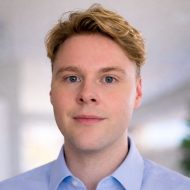
Riley Sanders is Head of Government Relations and Public Affairs at the Global Allergy & Airways Patient Platform (GAAPP). He leads the Speak Up for COPD Coalition and supports member organizations worldwide to implement recent World Health Assembly resolutions on lung health, skin diseases, and rare diseases, turning global commitments into concrete national action.
Previously, Riley led national and provincial advocacy at the Lung Health Foundation in Canada, working to improve prevention, diagnosis, and care for people with respiratory conditions. He has extensive experience advancing public health coverage, with a particular focus on patient advocacy, vaccination, and long‑term care reform.
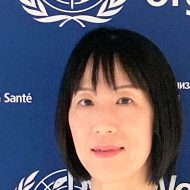
Yuka Sumi, MD, MPH, PhD, is a Medical Officer at the World Health Organization in Geneva, in the Department of Sexual, Reproductive, Maternal, Child and Adolescent Health and Ageing (LHR). She leads WHO’s work on Integrated Care for Older People (ICOPE), supporting countries to strengthen health and care systems and workforce capacity under universal health coverage. She has also led development of WHO guidance including the guideline on non-surgical management of chronic primary low back pain in adults and the second edition of the ICOPE handbook.
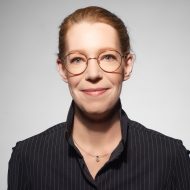
Prof Lotte Steuten is deputy chief executive of the Office of Health Economics (OHE), the world’s oldest independent health economics research organization, based in London, UK, and a globally recognized expert in health economics and outcomes research (HEOR).
Her research addresses challenges in valuing and paying for innovative therapies, with the aim of achieving effective, accessible, affordable, and efficient healthcare for all. She has published over 150 peer-reviewed papers on topics including the value of novel treatments, diagnostics and prevention for a wide range of non-communicable and infectious diseases.
With 2 decades of experience across Europe, the United States, and Asia Pacific, she advises governments, industry, and other organizations worldwide. She is frequently sought by media and international stakeholders for expert commentary on HEOR, value assessment, health policy innovation, and evolution of health technology assessment globally.
Alongside her position at OHE, Prof Steuten is a visiting honorary professor at City St George’s, University of London. Prior to joining OHE, she held academic faculty positions at the Fred Hutch Cancer Research Center and the University of Washington in the United States. She earned her PhD (with honors) from Maastricht University in the Netherlands.

Gregor Sneddon is Secretary General of the International Federation on Ageing (IFA), where he leads global efforts to advance healthy ageing through policy, partnerships, and advocacy. With a background spanning humanitarian response, ordained ministry, and civil society leadership—including as former Executive Director of HelpAge Canada—he brings a deep commitment to justice, equity, and the rights of older persons.
The IFA is a global civil society organisation dedicated to advancing healthy ageing and longevity through intersectoral collaboration. With general consultative status with the United Nations and formal relations with the World Health Organization, the IFA acts as a trusted, neutral convener bringing together diverse sectors to build shared understanding, bridge silos, and explore how policies, systems and investment can better adapt to longer lives.
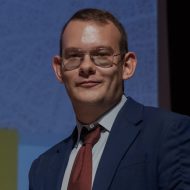
Manuel Veguin is the Head of International Relations at the Institute for Older People and Social Services (IMSERSO), the Spanish Government agency responsible for managing social services. In this role, he oversees the Institute’s international relations and coordinates its Ibero-American Cooperation programs. Since 2025, he has served as Spain’s national focal point in the UNECE Standing Working Group on Ageing in Geneva. He has been recently nominated as Seconded National focal Point for drafting a Convention of Human Rights of Older Persons in the intergubernamental Group in Geneva. He is also a member of the Senior Corps of Civil Administrators of the State.
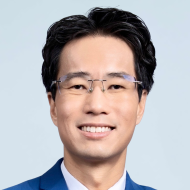
Professor Vernon Lee is a preventive medicine physician with extensive global health experience in pandemic preparedness and response, infectious disease epidemiology and health policy and management. He played an instrumental role in developing and implementing Singapore’s COVID-19 pandemic response, and has also responded to the 2003 SARS outbreak, 2009 influenza pandemic, and the 2016 Zika outbreak in Singapore.
Professor Lee previously served as Advisor to the Assistant Director General for Health, Security and Environment at the WHO headquarters in Geneva; Medical Epidemiologist in the WHO’s Country Office in Indonesia; and Head of the Biodefence Centre in the Singapore Armed Forces. Through his work, Professor Lee has been involved in major global health security collaborations, and in developing pandemic preparedness plans, risk assessment and disease management programmes. He continues to serve on expert committees at the international level.
An avid supporter of evidence-based health policy, Professor Lee has published about 200 scientific papers, many in top journals, including the New England Journal of Medicine (NEJM), Journal of the American Medical Association (JAMA), and the Lancet journals. He is an Adjunct Professor at the Singapore’s Saw Swee Hock School of Public Health.
Professor Lee graduated from medical school at the National University of Singapore. He also holds a PhD in epidemiology from the Australian National University, and the Master in Public Health and Master of Business Administration degrees from the Johns Hopkins University, USA.

David Reddy is Director General of IFPMA, leading the organization’s mission to translate scientific progress into the next generation of medicines and vaccines and championing innovation that delivers a healthier future for people everywhere.
Prior to joining IFPMA, David served for 13 years as CEO of Medicines for Malaria Venture (MMV), where he played a pivotal role as the organization established the largest portfolio of malaria drugs ever assembled, bringing forward 15 medicines that have saved more than 15 million lives.
In 2026, David joined the World Health Summit Council. He has also been a Board Member of the Coalition for Epidemic Preparedness (CEPI) from 2018-2026 and serves on the Board of Malaria No More UK.
Before joining MMV, David was a Vice President at Roche, where he held corporate responsibility for Roche’s response to the 2009/2010 influenza pandemic. In this role, he led the work to develop, communicate, and implement the company’s strategy for working with governments and the WHO on pandemic preparedness, and establishing a sustainable access program. Prior to this, he led Roche’s HIV/AIDS Disease Area Strategy Team, providing strategic leadership for Roche’s HIV portfolio.
David holds a PhD in Cellular and Molecular Biology from the University of Auckland, New Zealand and completed a post-doctoral fellowship in molecular neurobiology at the Friedrich-Miescher Institute in Basel, Switzerland. David has more than 30 years of management experience in the healthcare sector, including leadership of drug development teams including working on anti-viral diagnostics, a recombinant vaccine, and novel antiviral strategies; licensing and alliance management; market analytics and business planning; product and disease area management; and interfacing with governments, NGOs, and patient advocacy groups in priority disease areas.
Resources
Adult immunization: A critical investment for health, equity, and economic resilience
Immunization is an effective public health strategy to help prevent and reduce the impact of infectious diseases throughout the life course. As populations age and non-communicable diseases (NCDs) increase, our societies are becoming more vulnerable to preventable infectious diseases. This can put a significant strain on health systems, societies, and economies. Vaccines are wide recognized...
Read more
The socio-economic value of adult immunisation programmes
Download this OHE report, commissioned by IFPMA, to learn more about the socio-economic value of adult vaccination programems on individual lives and societies at large.
Read more
Immunizing across the life-course: Supporting healthy ageing, NCD management, and system resilience
This joint statement was issued from the WHA79 Side Event ‘Immunization across the life-course: Supporting healthy ageing, NCD management, and system resilience’ co-hosted by IFPMA, GAAPP, and IFA on 22 May 2026.
Read more