

Japan can lead the world in making preventive health pay
Authors
-
 David Reddy Director General, IFPMA
 -
 Go Takahashi Managing Director, JPMA
Share
Topics
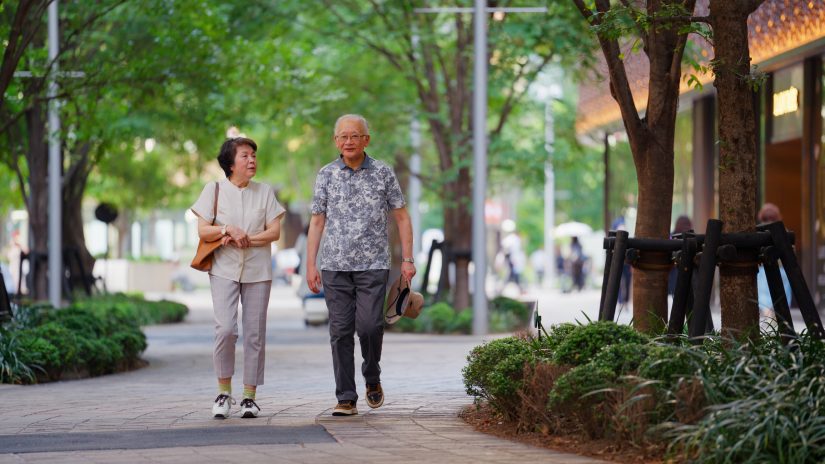
As the world’s first super-aging society, Japan can show how prevention protects health, workers and prosperity.
On Oct. 1, the world marks the International Day of Older Persons, highlighting both the opportunities and challenges of longer lives. Few countries face that challenge more directly than Japan, which has the world’s fastest-aging population. More than half of its population is already over 50, and its workforce is aging, too. This demographic shift makes rethinking economic priorities essential.
Maintaining the health and productivity of adults as they age is a central part of this. Preventive health measures must therefore become a key priority for Japanese leaders as the old-age dependency ratio surpasses 50%.
Policies for the prevention and early diagnosis of cancer and hypertension-related diseases are already being promoted. Vaccination should be the next priority in Japan’s preventive health strategy. Higher vaccination rates can help sustain the health care system while keeping Japan’s workforce healthier and more resilient.
Immunization — particularly against respiratory infections — stands out as one of the most immediate and scalable tools available to protect health and manage the economic consequences of aging.
A growing body of evidence shows a dual-protective effect of vaccines against both respiratory infections and noncommunicable diseases (NCDs), together a growing source of productivity loss, absenteeism and early exit from the workforce, as well as a significant driver of health care spending in rapidly aging Japan.
Globally, productivity losses comprise almost 90% of the economic burden of vaccine-preventable respiratory diseases among working-age adults. In Japan, NCDs such as cancer, cardiovascular disease and diabetes account for approximately 85% of Japan’s total health care spending. Since 2000, overall health care spending has grown more than twice as quickly as its real GDP. As the population ages, the economic and health care burden of NCDs is expected to climb further, impacting workforce participation. NCDs already account for a full three-quarters of annual deaths in Japan. This makes the prevention of infection-related NCD exacerbations an important focus of adult vaccination policy.
Compounding this, emerging evidence shows that preventable respiratory infections such as influenza, RSV, COVID-19 and pneumococcal pneumonia can trigger acute cardiovascular events, worsen diabetes and accelerate cognitive decline — and, in a way, the very process of aging itself.
Vaccines against these diseases show a strong protective effect against both severe acute infection and the NCD exacerbation that follows such an infection. More research is needed to better understand these linkages and their full potential as an important and underrecognized tool against the growing burden of these noncommunicable conditions of aging.
The economic impact of vaccines is equally persuasive. The analysis of adult immunization programs by the Office of Health Economics, commissioned by the International Federation of Pharmaceutical Manufacturers and Associations, suggests adult immunization programs deliver strong returns, with the estimating returns as high as 19-to-1. Much of this return comes from avoided hospitalizations, reduced complications of chronic disease and sustained workforce participation among adults over 50.
The World Health Organization has established a 75% vaccination coverage target for influenza among older adults. Building on this benchmark, expert groups such as the Steering Group on Prevention of Respiratory Infections and the European Health Management Association have called for similar 75% coverage targets for other adult respiratory vaccines, including COVID-19, RSV and pneumococcal vaccines.
Yet very few countries meet the WHO target. In particular, vaccination rates have shown a declining trend in recent years across many nations. Japan is no exception: According to data for fiscal 2023 released by the Ministry of Health, Labor and Welfare, 54% of older adults get a yearly flu shot, while 37% of older adults receive the pneumococcal vaccine annually. COVID-19 vaccination among older adults is estimated at 17.9% for the 2024-25 season, although no data has been published by the Ministry of Health, Labor and Welfare.
In Japan, vaccination programs for older adults against these three respiratory infections are implemented by local governments. However, operational arrangements, including resident cost-sharing and subsidies, differ among municipalities, which may create disparities in vaccination opportunities. It is therefore essential to ensure that residents are not disadvantaged as a result of such local differences.
Funding enables uptake, but systems, norms and trust drive it, exemplified by adult COVID-19 vaccination uptake. In Japan, efforts have been initiated to build a database to visualize vaccination coverage in addition to providing educational materials for local governments. Further advancing these initiatives is expected to strengthen both the systems and public trust needed to increase vaccination uptake.
Equally important is investment in education and engagement.
Japan’s national curriculum guidelines for junior high and high schools include content on understanding the risks of infectious diseases and the importance of vaccination. Building on this foundation, further efforts are expected to improve public understanding of why each vaccine matters and to equip health care professionals with the knowledge and confidence to recommend adult vaccination consistently.
Addressing this could pay dividends for Japan’s health care system and economy as the population ages. A recent cost-benefit analysis of adult respiratory vaccination in Japan estimates that scaled-up coverage could bring significant benefits to the health care system and economy of an aging Japan.
A comprehensive national framework that positions adult immunization as critical health care and economic infrastructure rather than a discretionary health expense can inform a coordinated national strategy that aligns vaccine coverage with Japan’s healthy aging, equity and economic goals.
Success could reduce avoidable hospitalizations, protect functional ability and help older adults remain independent for longer. These are critical outcomes for a country facing rising long-term care spending and a shrinking workforce.
A stronger and more coordinated national program should ensure that recommended respiratory vaccines are available to eligible older adults without out-of-pocket costs. Such an approach would strengthen Japan’s workforce and ease pressure on public finances. By continuing to build on current efforts, Japan can set a global standard for how super-aging societies use preventive health to achieve lasting prosperity.
This Oped was originally published on The Japan Times on 30 October 2026.
Authors