


A new dawn in global health: UHC as the path toward national health stewardship


The UHC High‑Level Forum in Tokyo marked an unmistakable turning point. It signaled a shift from dialogue to pragmatic action, with health and finance ministries jointly designing country‑owned, fiscally grounded UHC strategies to move beyond fragmented, crisis‑driven responses toward resilient, durable health systems that can make Universal Health Coverage (UHC) a reality.
UHC means ensuring that everyone can access quality health care without being pushed into poverty. The UHC High-Level Forum in Tokyo on December 6 felt like an inflection point – a moment when the global conversation has finally caught up with the reality on the ground. I was honored to represent the innovative pharmaceutical industry on behalf of the IFPMA, where I serve as Takeda’s Council Member.
A watershed moment: From donor dependence to health independence
As a health economist, I have spent my career at the intersection of health, government policy, and business at the national and international levels, attending many meetings on global health. This convening was different. Global health leaders and government representatives from finance and health spoke in a shared language that shifted from “global health architecture” to “health sovereignty,” with countries defining and owning their health agendas.
The Joint Declaration‘s commitment to country-led strategies, finance–health alignment, and system-level, accountable partnerships matters greatly for innovative pharmaceutical companies that want to be long-term partners in building resilient, self-reliant health systems.
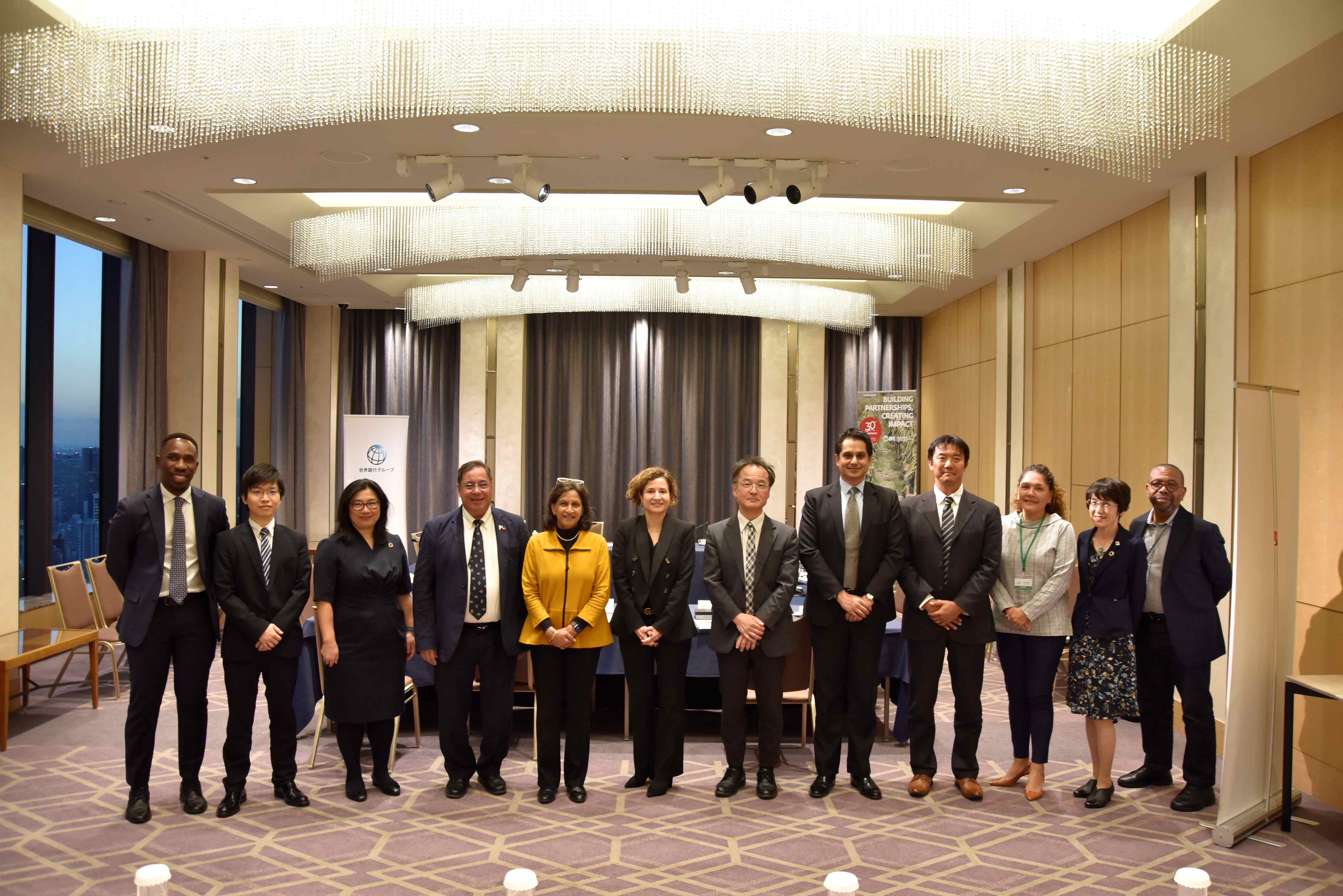
Photo from the Private Sector Roundtable held on December 5, ahead of the UHC High-Level Forum
Key messages from the UHC High-Level Forum
- Japan’s leadership on UHC is setting the tone
Japan’s central role has helped reframe UHC as a core element of national policy and economic strategy, where countries are defining, financing, and governing their own health systems.
Building on its own path to achieving UHC, Japan’s longstanding leadership in making UHC a national and global priority tracks back to Japan’s G7 Presidency in 2016, when it raised UHC to the top of the global health agenda, and hosted the inaugural UHC Forum a year later. Japan’s convening of health and finance leaders at the G20 Joint Finance and Health Ministers’ Meeting in 2019 also deserves recognition.
- Health–finance convergence is non-negotiable
The old paradigm is giving way to country-led, fiscally grounded health strategies. One of the most consequential shifts underway is the alignment between ministries of finance and health. A few elements demonstrated that this is not a technocratic adjustment. It is a structural change in who shapes health policy, and how:
- National Health Compacts supported by World Bank tie service delivery ambitions directly to fiscal realities.
- The UHC Knowledge Hub is designed to sustain momentum and track progress over time.
- Convergence of global health financing through the World Bank’s new MOUs with Gavi, the Global Fund, and co-financing with Asian Development Bank, signal a shift from vertical, disease-specific programs to country-led, system-strengthening approaches.
- The private sector as a partner in financing and delivering care
The Joint Declaration sends a clear message. Governments will take greater ownership of financing and stewardship. In return, they will expect the private sector to bring innovation, investment, and operational excellence – within a framework of accountability, equity, and long‑term partnership. This also presents an opportunity for private sector contributions to the UHC Knowledge Hub.
For the pharmaceutical industry, this means moving beyond a transactional view of delivering products toward being a trusted partner in designing and delivering sustainable health solutions. This conviction is established in the UHC2030 Private Sector Constituency Statement from the UN High Level Meeting on UHC in 2019 and related Commitments for the UN High Level Meeting on UHC in 2023.
UHC is achievable – but only if ambition is matched with aligned leadership, sustainable financing, and genuine partnership between the public and private sectors.
UHC as the organizing principle beyond 2030?
Looking beyond 2030, the Forum discussed UHC as a possible organizing principle for the next phase of the global health agenda – and as a central pathway to national health stewardship and resilience. Broader thought leadership, including work such as Wellcome’s “Future of Global Health Initiatives,” points in the same direction: the architecture of global health financing and governance will increasingly be judged by its contribution to resilient and durable health systems, not by isolated vertical results.
One message from Tokyo stands out: UHC is achievable – but only if ambition is matched with aligned leadership, sustainable financing, and genuine partnership between the public and private sectors.
For Takeda, this is not an abstract concept. It reflects how we work with governments and partners around the world to deliver measurable, country-level impact through our Access to Medicines initiatives, Global CSR Program, and as part of the Access Accelerated’s Financing Accelerator Network for NCDs. In addition, IFPMA has set out a holistic framework that explores the reasons why healthcare system strengthening is so important to enable people everywhere to access medicines and vaccines they need.
As the global community shapes the next phase of the path toward achieving UHC, the innovative pharmaceutical industry is committed to being an enduring, accountable partner for the benefit of patients and communities.
Author
Related insights

Foundations of competitiveness and growth start with strong healthcare systems and healthy populations
Read more
A better global health architecture delivers both innovation and access
Read more