
Ensuring harmonized approaches to life cycle assessment of health products
The global innovative pharmaceutical industry recognizes the increasing interest from health systems, procurers, and policymakers in understanding the environmental footprint of medicines and vaccines.
As conversations evolve around product-level life cycle assessment (LCA), it is vital that any emerging frameworks support clarity, methodological consistency, and insights that enable companies to improve their own environmental performance.
The recent publication of PAS 2090:2025-Pharmaceutical Products: Product Category Rules for Environmental Life Cycle Assessments, the first international standard providing a harmonized framework to measure and communicate the environmental impact of medicines across their entire lifecycle, represents a constructive solution to this issue. The standard was developed through an independent, multi-stakeholder consensus process led by the British Standard Institution and sponsored by NHS England, the UK Government’s Office for Life Sciences (OLS) and the Pharmaceutical LCA Consortium, which came together working with the Sustainable Markets Initiative (SMI) Health Systems Task Force and the Pharmaceutical Environment Group (PEG).
Harmonization must remain the cornerstone of any LCA approach considered by health systems. A proliferation of national or organizational requirements risks creating overlapping or contradictory rules, increasing complexity across global supply chains and diverting resources away from patient access and innovation. Such unintended consequences would ultimately slow the delivery of essential health products.
Equally important, any stakeholder considering the development or implementation of an LCA methodology should firstly consider whether a pre-existing LCA methodology would serve their objectives. If there is a clear need to develop a new approach, it will be critical to ensure that the methodology does not go beyond the requirements established by PAS:2090, as it represents a robust standard that was developed in consultation with a wide array of stakeholders. Ensuring clear timelines and engaging the appropriate group of experts and actors from the outset is key – including industry, technical specialists, health authorities, and procurers. Without this early, inclusive consultation, new methodologies risk being impractical, scientifically weak, or impossible to implement at scale due to divergences in requirements.
IFPMA encourages interested governments, international organizations, and technical bodies to work toward globally aligned, science-based, and feasible approaches to environmental assessment. Coherence across jurisdictions will help ensure that sustainability objectives advance together with timely access to medicines and vaccines, and understanding patient care pathways will allow for a better understanding of drivers for impact and opportunities to tackle these.
We remain committed to constructive dialogue with partners worldwide to support solutions that are both environmentally responsible and operationally viable.
About IFPMA
IFPMA represents the innovative pharmaceutical industry at the international level, engaging in official relations with the United Nations and multilateral organizations. Our vision is to ensure that scientific progress translates into the next generation of medicines and vaccines that deliver a healthier future for people everywhere.
ifpma.org
To achieve this, we act as a trusted partner, bringing our members' expertise to champion pharmaceutical innovation, drive policy that supports the research, development, and delivery of health technologies, and create sustainable solutions that advance global health.

Related news and resources
Healthy planet, healthy people: The innovative pharmaceutical industry’s contribution to the Kunming-Montreal Global Biodiversity Framework
Through company-level initiatives and decades of pre-competitive collaboration, IFPMA member companies are working to reduce environmental impact and contribute positively to a healthy and biodiverse planet.
Read more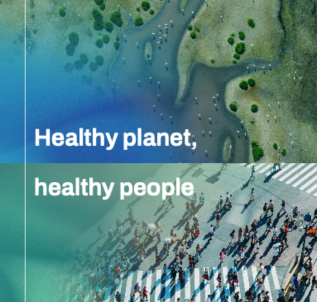
Advancing a health-centric global plastics treaty
On 5 August 2025, IFPMA, together with Health Care Without Harm and the Global Self-Care Federation, published a joint statement on the global plastics treaty under negotation at the continued fifth session of the Intergovernmental Negotiating Committee (INC-5.2) in Geneva.
Read more156th WHO Executive Board (EB156): Constituency statement on climate change and health
On 8 February 2025 at the EB156 in Geneva, the International Federation of Pharmaceutical Manufacturers & Associations (IFPMA), Global Diagnostic Imaging, Healthcare IT & Radiation Therapy Trade Association (DITTA), Global Self-Care Federation (GSCF), and International Hospital Federation (IHF) delivered a statement on Agenda Item 22: Climate change and health.
Read more